
RV Loans Explained: Trailer vs Motorhome, Down Payments & Terms
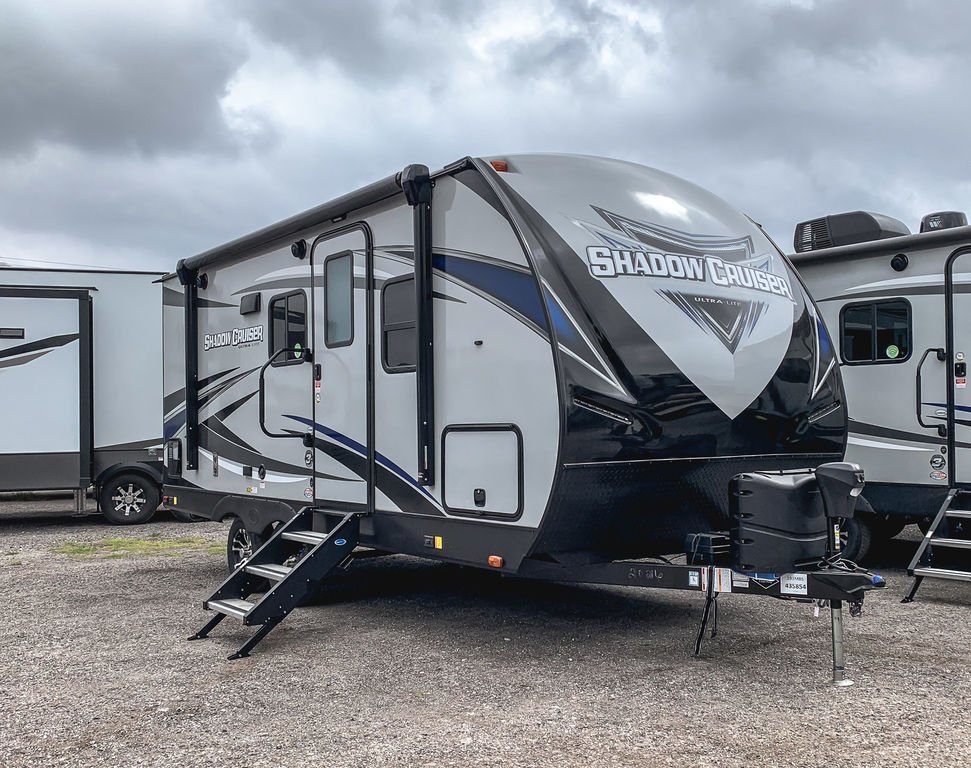
Canadian RV sales exceed $4.5 billion annually with 66,000 units sold, yet 58% of buyers enter financing blind to the dramatic differences between trailer and motorhome loans, down payment impacts on total costs, and term selections that can vary payments by $800 monthly for identical purchase prices. This extensive guide demystifies RV financing complexities, revealing how loan structures differ between towables and motorhomes, optimal down payment strategies that save tens of thousands, and term selections balancing affordability with long-term value—providing the knowledge needed to secure RV financing aligned with adventure dreams and financial reality. Table of Contents: The Problem: Why RV Financing Becomes a Financial Nightmare The Classification Confusion Crisis RV financing straddles multiple lending categories with towable trailers treated as recreational equipment, motorhomes classified as vehicles, and park models considered manufactured homes, creating vastly different lending requirements that surprise unprepared buyers. The RV industry data reveals lending criteria variations where identical $80,000 purchases might require 10% down for motorhomes but 25% for fifth wheels, with interest rates differing by 3-5% based solely on classification. The motorhome versus trailer distinction fundamentally alters financing availability, with motorhomes accessing automotive-style lending while trailers face recreational equipment restrictions. Banks comfortable with motorhome loans reject trailer applications entirely. Credit unions offering 15-year motorhome terms limit trailers to 10 years. Online lenders specializing in RVs charge premium rates for perceived risk differences. This classification divide means shopping for financing differs completely between RV types, yet dealers present them as interchangeable purchases. Classification impacts on financing: The registration and insurance complications multiply classification confusion as provinces treat RVs differently for regulatory purposes versus lending classifications. A Class B motorhome might register as a passenger vehicle but finance as a recreational vehicle. Travel trailers require no registration in some provinces but full plating in others. These regulatory variations affect insurance costs, financing requirements, and total ownership expenses in ways buyers discover only after purchase. Depreciation curves vary dramatically between classifications, affecting loan-to-value calculations and equity positions. Motorhomes depreciate like vehicles at 15-20% annually. Towable trailers lose value slower at 10-15% yearly. Premium brands retain value better regardless of type. Entry-level units plummet regardless of classification. Understanding these depreciation differences proves critical for term selection and down payment decisions, yet rarely gets discussed during sales. The Term Length Disaster RV loans extend to 20-year terms that seem affordable through low monthly payments but create total interest costs exceeding purchase prices, trapping buyers in perpetual debt on rapidly depreciating assets. Industry lending statistics show average RV loan terms increased from 10 years in 2010 to 15 years currently, with 20-year terms now common for expensive units despite devastating long-term financial implications. The affordability illusion created by extended terms enables purchases far beyond reasonable budgets. A $150,000 motorhome at $1,400 monthly over 20 years seems manageable compared to $2,500 over 10 years. Yet total payments reach $336,000 versus $300,000—$36,000 extra interest for payment reduction. Worse, 20-year ownership means massive maintenance costs as units age beyond warranty coverage. This mathematical trap enriches lenders while impoverishing buyers focused on monthly affordability. Extended term consequences compounding: The negative equity perpetuation through extended terms ensures owners remain underwater throughout ownership. RVs depreciate 50-60% over five years while 20-year loans reduce principal only 20% over the same period. This 30-40% gap represents $30,000-$60,000 negative equity on typical units. Trading requires massive losses or rollover financing. Selling becomes impossible without cash infusions. Owners remain trapped in deteriorating units or compound problems through successive underwater trades. Lifecycle misalignment between loan terms and realistic ownership periods creates financial disasters when replacement needs arise before payoff. Most RV owners trade within 5-7 years as family needs change or units deteriorate. Yet 15-20 year loans mean owing $80,000 on RVs worth $40,000 at trade time. Rolling $40,000 negative equity into new purchases creates unsustainable debt spirals. This structural problem, inherent to extended terms, guarantees financial stress regardless of payment affordability. The Down Payment Deception Dealers advertise “low down payment” financing to attract buyers, but minimal down payments trigger higher rates, longer terms, and expensive insurance requirements that multiply total costs by 30-50% over properly structured loans. The consumer financing research shows 10% down RV loans average 9-12% interest while 25% down achieves 5-7% rates, translating to $40,000-$60,000 difference in interest over loan terms. The loan-to-value penalty structure punishes low down payments through rate premiums that compound over extended terms. Financing 95% of purchase price adds 2-3% to interest rates. 90% financing increases rates 1-2%. 80% financing approaches preferred pricing. This tiered structure means $10,000 additional down payment on $100,000 RVs might save $20,000 in interest. Yet buyers minimize down payments seeking cash preservation, not understanding the mathematical penalty they’re accepting. Down payment impacts beyond rates: The insurance requirement cascade from minimal down payments adds thousands in hidden costs. Lenders require mortgage insurance for high-ratio loans, costing 2-4% of borrowed amounts. Gap insurance becomes essential with minimal equity, adding $1,000+ annually. Comprehensive coverage stays mandatory throughout extended terms. These insurance costs, triggered by low down payments, add $15,000-$25,000 over loan terms that proper down payments avoid entirely. Cash flow disruption from maximum financing creates payment stress exceeding initial calculations. RV payments plus insurance, storage, maintenance, and operational costs often total $2,000-$3,000 monthly. For families earning $100,000 annually, this represents 35% of gross income for recreational assets. Emergency funds get depleted maintaining payments. Credit cards accumulate covering shortfalls. This financial stress, preventable through proper down payments, destroys the recreational enjoyment RVs should provide. The Maintenance Cost Explosion RV maintenance costs shock owners accustomed to automotive service intervals, with multiple systems requiring specialized service that rapidly exceeds $5,000 annually for active users, devastating budgets already strained by extended loan payments. The RV service data indicates average annual maintenance costs of $3,000-$8,000 depending on usage, with major component failures adding thousands more every 3-5 years. System complexity multiplies maintenance requirements as RVs combine automotive, residential, and recreational systems each demanding specific service. Engine and chassis need automotive maintenance. Generators require 50-hour service intervals.